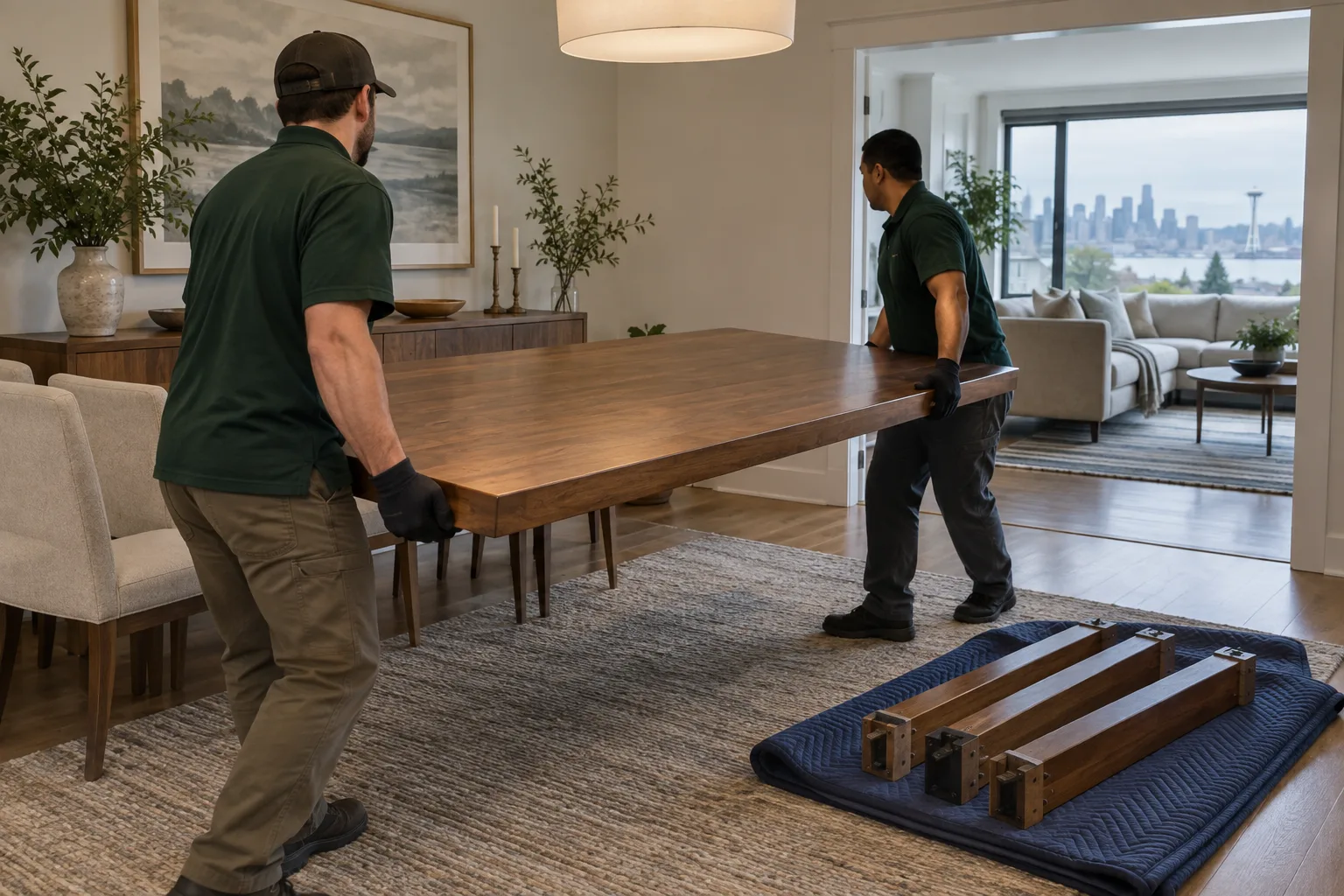
Name the material before the appointment
Solid wood, stone, glass, metal, and composite tops have different weight and handling concerns. Share photos of the whole table, the underside, the base, and any visible fasteners.
For glass, describe chips, cracks, and whether the top lifts free. Confirm acceptance before moving a damaged glass component.
Find the separation points
Many tables move more safely when the top, legs, pedestal, or extension mechanism can be separated. Do not assume a seam is designed to come apart. Manufacturer instructions or an experienced assessment are better than forcing concealed hardware.
Plan the room and route
Remove chairs, leaves, décor, and rugs. Measure the top, the base, the door, and the tightest turn. Note stairs, elevator size, loading distance, and any time-limited building access.
Decision table
Solid wood: confirm dimensions, weight indicators, and removable legs.
Glass: confirm condition, edge protection, and acceptance.
Stone: confirm material and professional handling needs.
Extension table: remove and account for leaves and loose hardware.
Ready to describe the job?
Review the dining table removal service page, then call with the item list and access notes.
(202) 555-0119 →